
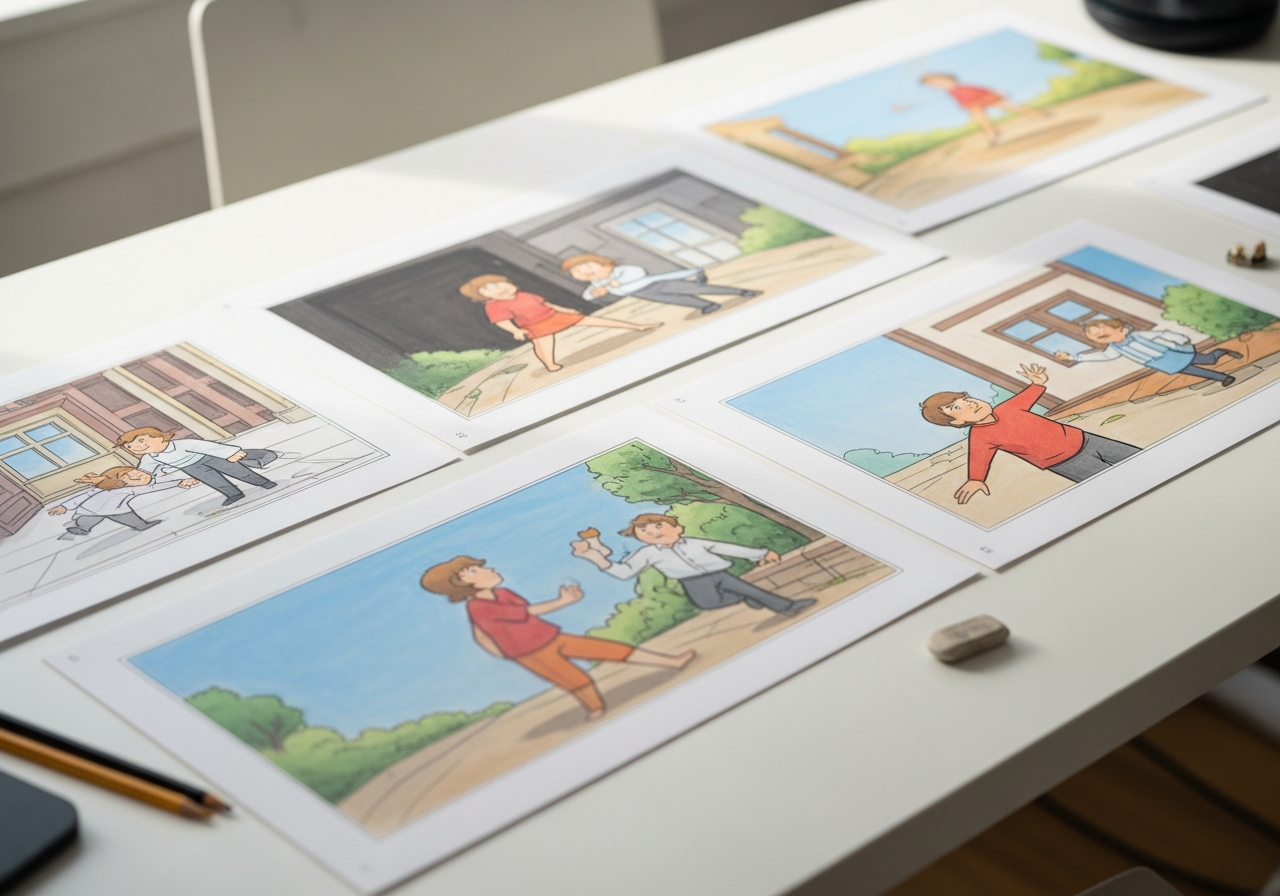
The Canadian animation industry has experienced remarkable growth, with powerhouse studios like Nelvana expanding their operations and driving unprecedented demand for skilled storyboard artists. As the sector continues to flourish, major employers consistently prioritize storyboarding skills when evaluating animation portfolios. Storyboarding serves as the essential blueprint that transforms written scripts into visual narratives, making it the cornerstone skill that studios seek in new hires.
Recent industry data reveals that Canadian animation studios have increased their storyboard artist hiring by 35% over the past three years, with companies like Nelvana, Atomic Cartoons, and Mercury Filmworks specifically highlighting storyboarding expertise as their top portfolio requirement. This focus stems from storyboarding’s critical role in establishing narrative flow, managing production costs, and ensuring efficient collaboration across international co-production projects that define Canada’s animation landscape.
The Central Role of Storyboarding in Animation Production
Storyboarding functions as the vital translation layer between written scripts and visual storytelling, enabling Canadian studios to plan shots, establish pacing, and coordinate complex production workflows efficiently. This pre-visualization process allows teams to experiment with narrative approaches, camera angles, and timing decisions before committing to expensive animation phases. For Canadian studios operating in globally competitive markets, effective storyboarding directly impacts project profitability and creative success.
The collaborative nature of storyboarding makes it particularly valuable in Canada’s animation ecosystem, where studios frequently work on international co-productions requiring clear visual communication across distributed teams. Major Canadian producers rely on detailed storyboards to maintain creative consistency while managing tight deadlines and budget constraints. This emphasis on planning and efficiency explains why studios consistently rank storyboarding skills as their primary hiring criterion.
Industry examples demonstrate significant cost savings achieved through thorough storyboard development, with studios reporting 20-30% reductions in revision cycles when working with skilled storyboard artists. These savings become especially critical in globally oriented production environments where time zone differences and remote collaboration demand precise visual planning from the earliest development stages.
Visual Storytelling as Foundation
Storyboarding requires artists to master the fundamental principles of visual narrative communication, translating dialogue, action, and emotion into compelling panel sequences. Successful storyboard artists demonstrate expertise in composition, camera angles, character positioning, and visual flow that guides viewers through complex story beats. These skills form the foundation for all subsequent animation work, making storyboard proficiency essential for career advancement.
Canadian studios particularly value artists who can convey subtle emotional beats and character motivations through visual storytelling techniques. The ability to communicate narrative information efficiently through panel layouts, close-ups, and establishing shots directly impacts production quality and audience engagement across diverse international markets.
Efficiency in Pre-Production
Skilled storyboard artists identify potential creative and technical challenges early in the production pipeline, preventing costly revisions during later animation phases. This problem-solving capability has become increasingly valuable as Canadian studios expand their global market presence and work within tighter production schedules. Studios report that effective storyboarding reduces overall production timelines by 15-25% compared to projects with inadequate pre-visualization.
The growing demand for storyboard expertise directly correlates with Canada’s animation industry expansion, as studios require artists capable of managing complex narrative structures across feature films, television series, and streaming content. Market growth has created abundant opportunities for skilled storyboard artists, with job postings increasing 40% annually in major animation hubs like Toronto and Vancouver.
Why Storyboarding Trumps Other Skills in Portfolios
Canadian animation studios consistently rank storyboarding above other portfolio elements due to its direct impact on storytelling effectiveness and production efficiency. While character design, animation skills, and technical proficiency remain important, studios recognize that strong storyboarding capabilities indicate an artist’s understanding of narrative structure, visual communication, and collaborative production processes. This emphasis reflects the industry’s evolution toward more sophisticated storytelling approaches that require comprehensive pre-visualization.
Portfolio reviews at major Canadian studios reveal that storyboarding samples receive the most detailed evaluation, often determining whether candidates advance to interview stages. Studios actively seek artists who demonstrate storytelling instincts through their storyboard work, viewing this skill as the foundation for successful careers in animation production.
| Skill Category | Why Prioritized in Portfolios | Canadian Studio Examples |
|---|---|---|
| Storyboarding | Demonstrates narrative understanding and visual planning | Nelvana, Mercury Filmworks, Atomic Cartoons |
| Character Design | Shows artistic style but limited production impact | 9 Story Media Group, DHX Media |
| 2D Animation | Technical proficiency without storytelling context | Guru Studio, Breakthrough Entertainment |
| 3D Modeling | Specialized skill with limited narrative application | Mainframe Studios, Rainmaker Entertainment |
| Background Art | Visual development without storytelling integration | Copernicus Studios, Pipeline Studios |
Portfolio Expectations from Studios
Canadian animation studios maintain specific expectations for storyboard portfolio content, seeking diverse project examples that demonstrate comprehensive storytelling abilities. Successful portfolios showcase clear visual communication skills through varied scenarios including dialogue scenes, action sequences, and emotional character moments. Studios particularly value portfolios that display consistent quality across different story genres and production styles.
Portfolio evaluation focuses on technical execution combined with narrative effectiveness, with reviewers examining panel clarity, character expression, and visual flow throughout story sequences. The most competitive portfolios demonstrate understanding of Canadian content requirements and international co-production standards that define the industry landscape.
- Diverse project samples spanning dialogue scenes, action sequences, and character-driven moments
- Clear composition and panel flow that guides reader attention effectively
- Strong character expression and body language communicating emotional beats
- Professional presentation with clean, readable artwork and consistent formatting
- Evidence of revision and refinement skills through multiple draft examples
- Understanding of camera angles, shot types, and cinematic storytelling techniques
Canadian Animation Industry Demand Drivers
Canada’s animation sector has emerged as a global production powerhouse, driven by major studios like Nelvana, Atomic Cartoons, and 9 Story Media Group expanding their international partnerships and content development initiatives. Government tax incentives, skilled workforce availability, and strategic geographic positioning have attracted significant foreign investment, creating sustained demand for talented storyboard artists. The industry’s growth trajectory shows no signs of slowing, with new studio facilities opening regularly in Toronto, Vancouver, and Montreal.
Streaming platform expansion has particularly benefited Canadian studios, as global content demand increases opportunities for original programming and co-production partnerships. Major international distributors increasingly rely on Canadian studios for high-quality animated content, driving consistent hiring across all production roles. This market expansion directly correlates with increased emphasis on storyboarding skills, as studios require artists capable of managing complex narrative projects for diverse international audiences.
Industry statistics reveal that Canadian animation production value exceeded $1.5 billion in 2023, representing 25% growth over the previous year. This expansion has created over 3,000 new jobs across the sector, with storyboard artist positions representing the fastest-growing category within animation employment. Toronto and Vancouver have emerged as primary animation hubs, housing over 80% of Canada’s major production facilities and offering abundant opportunities for skilled professionals.
Key Studios and Their Focus
Nelvana remains Canada’s largest animation studio, consistently emphasizing storyboard expertise in their hiring practices while producing content for global markets including Nickelodeon, Disney, and Netflix. The studio’s commitment to visual storytelling excellence has established industry standards that influence hiring practices across Canadian animation companies. Mercury Filmworks has similarly built its reputation on superior storyboard development, attracting major clients through consistently high-quality pre-production work.
Atomic Cartoons has expanded rapidly through strategic partnerships with international producers, requiring skilled storyboard artists capable of adapting content for diverse cultural markets. Other significant players including 9 Story Media Group, Guru Studio, and DHX Media maintain similar emphasis on storyboarding skills when evaluating potential hires, recognizing these capabilities as essential for competitive success.
Job Opportunities in Film and Animation
Canadian studios actively recruit storyboard artists for film, television, and increasingly, gaming projects that require sophisticated visual planning capabilities. The convergence of traditional animation with interactive media has created new opportunities for artists skilled in sequential storytelling and visual development. Major gaming companies including Ubisoft Montreal and EA Vancouver regularly hire storyboard artists for cinematic sequences and narrative development.
Television production remains the largest employment sector, with streaming services driving unprecedented demand for animated content across all age demographics. Feature film opportunities continue expanding as Canadian studios secure larger international co-production deals, requiring experienced storyboard artists capable of managing complex narrative structures and character development arcs.
Essential Storyboarding Skills Studios Seek
Canadian animation studios prioritize specific technical and creative competencies when evaluating storyboard artist candidates, focusing on skills that directly impact production efficiency and storytelling quality. The most successful artists demonstrate mastery of rapid visualization techniques, narrative pacing, and camera language that translates effectively across different media formats. Studios particularly value artists who combine traditional drawing skills with digital workflow proficiency.
Professional storyboard development requires understanding of industry-standard software including Toon Boom Storyboard Pro, which has become essential for Canadian studio workflows. Artists must demonstrate capability with both hand-drawn and digital approaches, adapting their techniques to match specific project requirements and production timelines.
- Quick sketching abilities that capture essential visual information efficiently without excessive detail
- Strong understanding of narrative pacing and timing for different story beats and emotional moments
- Comprehensive knowledge of camera angles, shot compositions, and cinematic language applications
- Character acting and expression skills that convey personality and emotion through body language
- Proficiency with industry-standard software including Toon Boom Storyboard Pro and Photoshop
- Collaborative workflow capabilities for team-based production environments and client feedback integration
- Understanding of production constraints including budget limitations and technical requirements
Tools and Workflow Proficiency
Modern Canadian studios increasingly rely on hybrid storyboarding workflows that combine traditional sketching techniques with digital production tools, requiring artists to demonstrate flexibility across multiple platforms. Toon Boom Storyboard Pro has emerged as the industry standard, offering integrated animatic creation and collaborative review capabilities that streamline production workflows. Artists must also maintain proficiency with complementary software including Photoshop for cleanup work and After Effects for basic motion testing.
Emerging AI-assisted tools are beginning to influence storyboard production, though Canadian studios continue emphasizing human creativity and storytelling instincts over automated solutions. The most competitive candidates demonstrate awareness of technological developments while maintaining focus on fundamental artistic and narrative skills that define effective visual storytelling.
Building a Winning Portfolio for Canadian Studios
Creating an effective animation portfolio requires strategic presentation of storyboard work that demonstrates both technical proficiency and storytelling capabilities valued by Canadian studios. Successful portfolios balance diverse project samples with consistent quality standards, showcasing an artist’s ability to adapt their visual style to different narrative requirements while maintaining clear communication throughout story sequences. The most competitive portfolios include animatic examples that demonstrate understanding of timing, pacing, and motion principles essential for animation production.
Portfolio development should emphasize narrative diversity while avoiding common mistakes that diminish professional presentation. Studios seek artists who demonstrate revision capabilities, collaborative skills, and understanding of production requirements that define successful animation careers. Effective portfolios also reflect awareness of Canadian content standards and international co-production expectations that shape industry practices.
The presentation format significantly impacts portfolio effectiveness, with digital portfolios offering advantages for remote review processes increasingly common in post-pandemic hiring practices. Artists should prioritize clear navigation, professional formatting, and accessible file sizes that facilitate efficient evaluation by busy studio personnel reviewing multiple candidates.
| Portfolio Element | Why Studios Prioritize | Tips for Success |
|---|---|---|
| Story Sequence Samples | Demonstrates narrative flow and pacing control | Include 3-5 complete sequences with clear beginning, middle, end |
| Character Expression Sheets | Shows emotional range and acting abilities | Focus on subtle expressions and body language variations |
| Action Scene Boards | Tests dynamic composition and motion planning | Emphasize clear staging and impactful camera angles |
| Animatic Examples | Proves understanding of timing and rhythm | Keep under 2 minutes with strong audio synchronization |
| Revision Process Documentation | Indicates collaborative skills and flexibility | Show before/after examples with brief explanation notes |
| Professional Presentation | Reflects attention to detail and work standards | Consistent formatting, clear navigation, accessible file sizes |
| Genre Diversity | Shows adaptability to different project types | Include comedy, drama, action samples appropriate for target studios |
Common Portfolio Pitfalls
Many aspiring storyboard artists undermine their portfolio effectiveness through preventable presentation and content mistakes that immediately signal inexperience to studio reviewers. Understanding these common errors helps artists avoid critical missteps that can eliminate them from consideration regardless of their underlying talent level. Professional portfolio development requires awareness of industry standards and reviewer expectations.
The most damaging portfolio mistakes involve fundamental misunderstandings about professional storyboard requirements, including inappropriate content choices, poor technical execution, and inadequate narrative development. Studios consistently reject portfolios that demonstrate these basic shortcomings, making awareness of potential pitfalls essential for competitive success.
- Over-polished artwork that obscures storytelling clarity and suggests misunderstanding of storyboard purpose
- Incomplete story sequences that fail to demonstrate narrative development and resolution capabilities
- Poor panel composition leading to confusing visual flow and unclear story progression
- Excessive focus on character design elements rather than sequential storytelling applications
- Inconsistent presentation quality suggesting lack of professional standards and attention to detail
Networking and Training Paths
Canadian animation education programs including VANAS (Vancouver Animation School), Seneca College, and VFS (Vancouver Film School) provide structured pathways for developing professional storyboard portfolios while offering valuable industry connections. These institutions maintain direct relationships with major studios, facilitating student placement opportunities and portfolio feedback from working professionals. Graduates benefit from established recruitment pipelines and ongoing career support services.
Industry networking events including Ottawa International Animation Festival, Toronto Animation Arts Festival, and regional studio open houses provide essential opportunities for portfolio presentation and professional relationship building. Many Canadian studios actively recruit at these events, making attendance valuable for serious career development beyond formal educational programs.
Training Programs Emphasizing Storyboarding
Canadian educational institutions have developed comprehensive animation programs that prioritize storyboarding skills in response to industry demand, offering specialized curricula designed to meet studio hiring requirements. These programs combine traditional artistic training with digital workflow proficiency, ensuring graduates possess both creative capabilities and technical skills valued by professional animation studios. The most effective programs maintain direct industry partnerships that influence curriculum development and provide student placement opportunities.
Portfolio development represents a central focus across leading Canadian animation programs, with structured feedback processes and industry mentor relationships that guide student progress toward professional standards. Many programs culminate in capstone projects specifically designed to generate portfolio material suitable for studio presentation, maximizing graduate employment prospects.
Success metrics from leading programs demonstrate strong employment outcomes, with graduates securing positions at major Canadian studios within six months of completion at rates exceeding 75%. This success stems from curriculum design that emphasizes practical skills application and industry-standard workflow training that prepares students for immediate professional contribution.
| Program/School | Storyboarding Focus | Portfolio Outcomes | Location |
|---|---|---|---|
| Vancouver Animation School (VANAS) | Comprehensive storyboard curriculum with industry mentors | Professional portfolio development with studio placement support | Vancouver, BC |
| Vancouver Film School | Integrated storyboard training within animation programs | Industry-standard portfolio production with studio partnerships | Vancouver, BC |
| Seneca College | Sequential art emphasis with digital workflow training | Competition-ready portfolios with career placement services | Toronto, ON |
| Sheridan College | Classical animation training with modern storyboard techniques | Exceptional portfolio quality with high studio recruitment rates | Oakville, ON |
| Emily Carr University | Experimental approaches combined with commercial applications | Creative portfolio development with artistic distinction | Vancouver, BC |
| Concordia University | Academic foundation with practical skill development | Well-rounded portfolios suitable for diverse career paths | Montreal, QC |
| Alberta University of the Arts | Traditional storytelling methods with digital integration | Strong narrative portfolios with regional studio connections | Calgary, AB |
| Algonquin College | Technical proficiency with collaborative workflow emphasis | Professional portfolios with government sector opportunities | Ottawa, ON |
From Training to Studio Hire
Leading Canadian animation programs have established direct recruitment pipelines with major studios, facilitating graduate placement through portfolio showcases, internship programs, and industry networking events. These relationships provide students with authentic professional experience while allowing studios to evaluate potential hires in real production environments. Success rates demonstrate the effectiveness of structured training approaches, with program graduates representing significant percentages of new hires at major Canadian studios.
Portfolio development benefits from program-specific mentorship and industry feedback that guides students toward professional standards expected by studio hiring managers. Graduate success stories consistently emphasize the value of structured skill development and portfolio refinement provided by established educational programs, making formal training an increasingly attractive pathway for animation career development in Canada’s competitive market.