
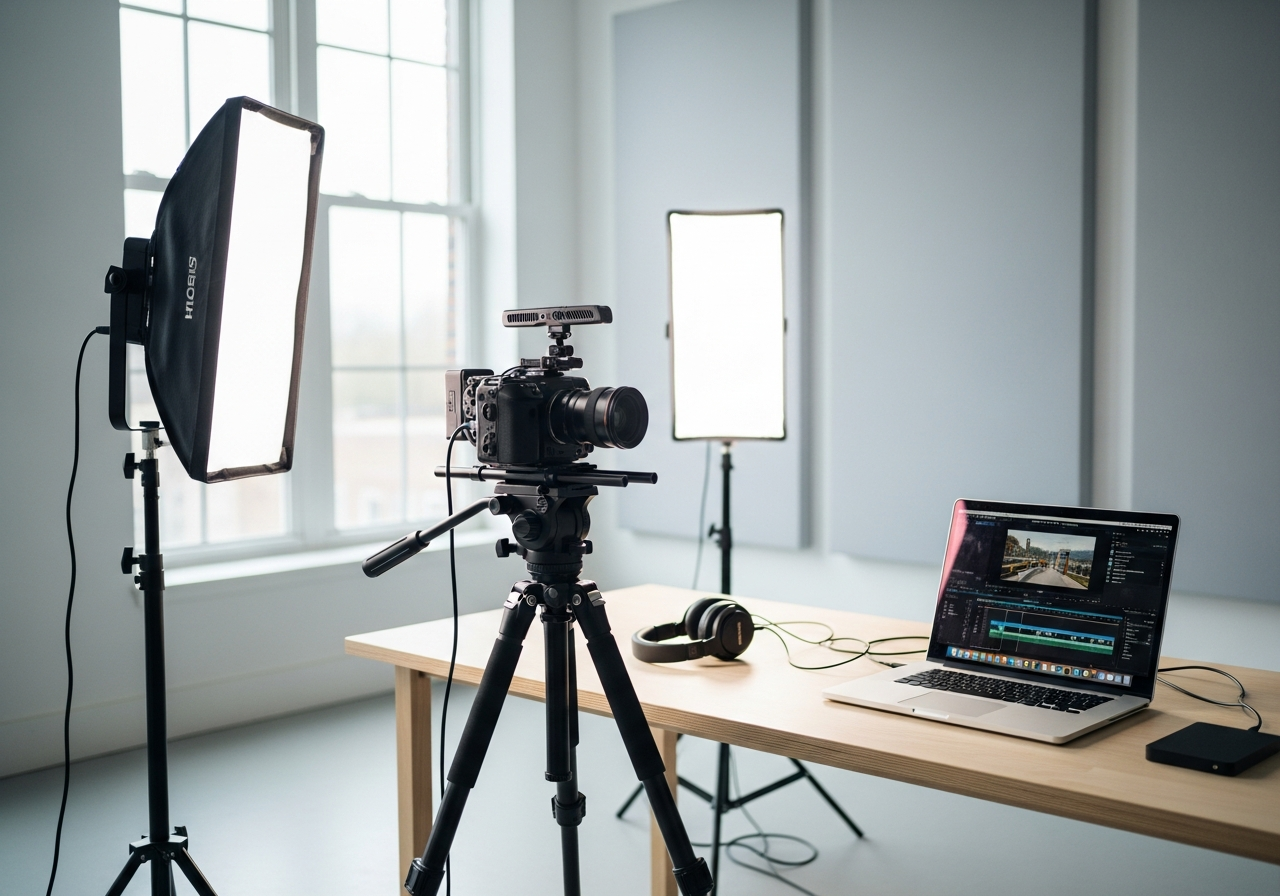
Film school represents a significant investment in your creative future, but the costs extend far beyond tuition fees. In Ontario, aspiring filmmakers must carefully budget for essential equipment including cameras, lighting systems, and editing suites that will form the backbone of their educational journey. Understanding these expenses upfront allows students to make informed decisions about their film education investment.
The landscape of film equipment has evolved dramatically, offering both opportunities and challenges for budget-conscious students. While technology has made professional-grade equipment more accessible, the sheer variety of options can overwhelm newcomers to the field. Smart budgeting strategies combined with knowledge of Ontario’s educational resources can help students maximize their purchasing power while building a comprehensive filmmaking toolkit.
Successful film students learn to balance quality with affordability, often starting with essential items and expanding their kit over time. This strategic approach prevents financial strain while ensuring access to the tools needed for coursework and personal projects. Ontario’s film schools and local industry provide unique opportunities for equipment sharing, rentals, and educational discounts that can significantly reduce overall costs.
Essential Camera Equipment for Film Students
DSLR and Mirrorless Camera Options
Modern DSLR and mirrorless cameras have revolutionized student filmmaking by offering cinematic quality at accessible price points. Entry-level options like the Canon EOS Rebel series or Sony Alpha a6000 provide excellent learning platforms starting around $400-600 CAD for the body alone. These cameras offer manual controls, interchangeable lenses, and video capabilities that rival professional equipment from just a decade ago.
Mid-range options such as the Canon EOS 90D or Sony a7 III represent significant upgrades in image quality and low-light performance, typically ranging from $1,200-2,500 CAD. These cameras provide features like 4K recording, advanced autofocus systems, and professional-grade codecs that prepare students for industry-standard workflows. The investment in a quality camera body often pays dividends throughout a student’s educational journey and early career.
When budgeting for camera equipment, students should allocate approximately 40-50% of their total equipment budget to the camera system, including essential lenses. A versatile lens kit might include a standard zoom (24-70mm equivalent), a prime lens for low light (50mm f/1.8), and a wide-angle option for establishing shots. This combination provides flexibility for most student projects while maintaining reasonable costs.
Professional Camera Systems and Accessories
Professional cinema cameras like the Blackmagic Pocket series or Canon C70 offer superior image quality and professional features, but come with significantly higher price tags ranging from $1,500-5,000 CAD. These cameras provide advanced color science, higher bitrate recording, and professional input/output options that mirror industry standards. However, they require additional investments in media, batteries, and support equipment.
Essential camera accessories include tripods, stabilizers, external monitors, and audio recording equipment. A quality tripod system can range from $200-800 CAD depending on weight capacity and features, while handheld stabilizers or gimbals add another $300-1,500 CAD to the budget. External monitors improve focus accuracy and exposure control, typically costing $200-600 CAD for student-appropriate models.
| Camera Category | Price Range (CAD) | Best For | Key Features |
|---|---|---|---|
| Entry DSLR | $400-800 | Beginners | 1080p video, basic manual controls |
| Mid-range Mirrorless | $1,200-2,500 | Advanced students | 4K recording, low-light performance |
| Cinema Camera | $1,500-5,000 | Professional projects | RAW recording, professional I/O |
| Professional Accessories | $500-2,000 | All levels | Tripods, monitors, stabilizers |
Lighting Equipment and Setup Costs
Basic Lighting Kits for Student Projects
Lighting education begins with understanding basic three-point lighting setups, making starter kits essential for film students. Entry-level LED panel kits from manufacturers like Neewer or Godox provide adjustable color temperature and dimming controls for $150-400 CAD per three-light kit. These lightweight, energy-efficient lights offer excellent learning opportunities while remaining budget-friendly for students.
Practical lighting modifiers including softboxes, reflectors, and diffusion materials significantly expand creative possibilities without major budget increases. A comprehensive modifier kit typically adds $100-300 CAD to the lighting budget but provides tools for achieving professional-looking results. Students should prioritize versatile modifiers that work across multiple lighting scenarios rather than specialized equipment with limited applications.
Light stands, extension cords, and basic grip equipment form the foundation of any lighting setup. Quality light stands range from $50-150 CAD each, while grip equipment including clamps, flags, and bounce cards add another $200-500 CAD to the overall lighting budget. This support equipment often lasts throughout a filmmaker’s career, making it a worthwhile investment for serious students.
Advanced Lighting Solutions and Professional Equipment
Professional lighting systems like ARRI or Kino Flo fixtures provide superior light quality and industry-standard features, but represent significant investments ranging from $500-3,000 CAD per light. These systems offer precise color control, higher output levels, and robust construction suitable for demanding production environments. However, rental options often prove more economical for students working on occasional advanced projects.
Specialized lighting equipment including HMI lights, practical bulbs, and color gels expand creative possibilities while adding complexity to budgets and workflows. HMI lights provide powerful daylight-balanced illumination but require ballasts, safety equipment, and electrical knowledge that increases both costs and learning curves. Students should evaluate whether their projects justify these advanced lighting investments.
Lighting control systems including dimmers, wireless controls, and DMX interfaces enable sophisticated lighting designs but require additional technical knowledge and budget allocation. These systems typically add $300-1,500 CAD to professional lighting setups while providing capabilities that mirror film industry practices. Students interested in cinematography specialization should consider these investments for advanced coursework.
Editing Suite Hardware and Software Requirements
Computer Specifications for Video Editing
Video editing demands significant computational power, making computer specifications crucial for smooth workflows and efficient project completion. Modern editing requires minimum 16GB RAM, dedicated graphics cards, and fast storage solutions, with capable editing workstations starting around $1,200-1,800 CAD for desktop systems. Laptop editing setups typically cost 20-30% more while offering portability benefits important for collaborative student work.
Processor selection impacts editing performance significantly, with Intel Core i7 or AMD Ryzen 7 processors providing excellent price-to-performance ratios for student budgets. Graphics cards from NVIDIA’s RTX series or AMD’s RX series accelerate rendering and effects processing, with mid-range options like the RTX 3060 offering substantial performance improvements for $400-600 CAD. These investments reduce editing time and improve the overall creative experience.
Storage solutions require balancing speed, capacity, and cost considerations unique to video editing workflows. Fast SSD drives for active projects combined with larger traditional drives for archive storage provide optimal configurations, typically adding $300-800 CAD to system costs. External storage solutions offer flexibility for collaboration and backup while enabling system upgrades as storage needs grow throughout film school.
Professional Editing Software and Licensing
Industry-standard editing software including Avid Media Composer, Adobe Premiere Pro, and DaVinci Resolve each offer different advantages for student workflows and career preparation. Adobe Creative Cloud subscriptions provide comprehensive toolsets for $20-50 CAD monthly, while DaVinci Resolve offers professional-grade capabilities at no cost. Students should consider long-term career goals when selecting primary editing platforms.
Educational discounts significantly reduce software costs, with Adobe offering student pricing at substantial savings and Avid providing educational licenses for qualifying institutions. Many Ontario film schools provide software access through computer labs, allowing students to defer personal licensing decisions until they determine preferred workflows and software preferences through hands-on experience.
- Adobe Creative Cloud Student Edition: $20.99 CAD/month for full suite access
- Avid Media Composer Student License: Free for qualifying students
- Final Cut Pro: $399.99 CAD one-time purchase for Mac users
- DaVinci Resolve: Free with professional features, $395 CAD for Studio version
- Plugins and additional software: $200-800 CAD annual budget for specialized tools
Cost-Saving Strategies for Ontario Film Students
Educational Discounts and Institutional Resources
Ontario film schools often negotiate group purchasing agreements with equipment manufacturers, providing students access to significant discounts on cameras, lighting, and editing equipment. These institutional partnerships can reduce equipment costs by 15-30% compared to retail pricing, making coordination with classmates beneficial for major purchases. Students should inquire about available programs early in their educational journey to maximize savings opportunities.
Educational software licensing through institutions provides substantial savings compared to commercial licenses, often including professional-grade applications at student-friendly pricing. Many schools maintain equipment lending libraries allowing students to experiment with expensive gear before making purchase decisions. These resources help students identify essential equipment while avoiding costly mistakes on incompatible or unnecessary items.
Work-study programs and teaching assistant positions sometimes provide access to advanced equipment and facilities outside normal class hours. These opportunities offer hands-on experience with professional-grade gear while providing income to offset equipment costs. Students should explore these programs as dual-purpose strategies for skill development and budget management.
Used Equipment Markets and Rental Options
Ontario’s active film community creates robust used equipment markets through online platforms, equipment dealers, and school bulletin boards. Careful purchasing of used cameras, lights, and editing equipment can reduce costs by 30-50% while still providing quality learning tools. Students should research original specifications, verify functionality, and understand warranty limitations when considering used equipment purchases.
Equipment rental services in Toronto, Ottawa, and other Ontario film centers provide access to professional gear for specific projects without purchase commitments. Daily rental rates typically range from 5-15% of retail equipment value, making rentals economical for occasional use of expensive specialized equipment. Students can rent high-end gear for important projects while building their personal kit with frequently-used items.
| Equipment Category | New Price Range | Used Savings | Rental Cost/Day |
|---|---|---|---|
| DSLR Camera Body | $800-2,500 | 30-40% | $40-120 |
| Lighting Kit | $300-1,500 | 25-35% | $25-75 |
| Professional Lenses | $500-3,000 | 20-30% | $30-150 |
| Audio Equipment | $200-1,000 | 25-40% | $15-50 |
Budget Planning and Financial Management
Creating Realistic Equipment Budgets
Successful equipment budgeting begins with honest assessment of current financial resources and realistic timelines for building comprehensive filmmaking kits. Students should categorize equipment into immediate necessities, near-term goals, and long-term aspirations while allocating funds accordingly. A typical first-year budget might prioritize basic camera and editing capabilities while deferring advanced lighting and audio equipment until later in the program.
Priority-based purchasing strategies help students maximize limited budgets by focusing on versatile equipment that serves multiple functions. A quality camera body with one versatile lens provides more learning value than multiple specialized accessories, while basic lighting and audio equipment enables complete project production. Students should resist the temptation to purchase numerous low-quality items in favor of fewer high-quality essentials.
Seasonal purchasing patterns can provide additional savings opportunities, with equipment sales typically occurring around back-to-school periods, Black Friday, and new product launches. Planning major purchases around these cycles can stretch budgets further while providing access to newer equipment models. Students should track prices over time to identify genuine sales versus normal price fluctuations.
Financing Options and Payment Plans
Equipment financing through manufacturer programs, retailer payment plans, and educational loans can make expensive purchases more manageable for students with limited upfront capital. Many camera and computer manufacturers offer 0% financing for qualified buyers, spreading costs over 12-24 month periods. These programs require careful evaluation of total costs and payment obligations alongside other student financial commitments.
Credit building through responsible equipment financing can benefit students’ long-term financial health while enabling access to necessary tools. Small, manageable payments on quality equipment demonstrate financial responsibility while avoiding the debt accumulation associated with credit card purchases. Students should understand all terms and conditions before committing to financing agreements.
Government student aid programs in Ontario may provide additional resources for equipment purchases, particularly for students in recognized film programs. Some provincial and federal programs specifically support career-focused education including necessary tools and equipment. Students should explore these options early in their academic planning to understand available resources and application requirements.